

Most owners can name every firearm they have. Very few could hand an adjuster a list with serial numbers, purchase prices and photos the morning after a break-in. That gap is where claims get slow, small or denied.
A good record takes an evening to build and a minute to keep current. Here is what it should hold.
Check what your policy actually covers
Before you document anything, read the personal property section of your homeowners or renters policy, or ask your agent. Many standard policies cap theft coverage for firearms at a set amount, which a single good rifle and optic can exceed. If your collection is worth more than that cap, ask about scheduling individual firearms or adding a separate rider. Scheduled items are usually listed one by one at an agreed value, and your insurer will tell you what proof they want to see.
What to record for every firearm
- Make, model and caliber, written the way they appear on the firearm.
- Serial number. Photograph it too, close and in focus.
- Purchase date, price and where you bought it.
- Receipts, bills of sale and transfer paperwork.
- Optics, lights and other added accessories, with their own prices.
- Condition and any upgrades that add value: trigger work, refinishing, custom stocks.
- Appraisals for anything collectible or valuable. Keep the date of the appraisal with it.
Take photos the right way
Shoot each firearm on a plain background from both sides, then the serial number and any markings or engravings. Add a wider shot of the safe or cabinet with everything in it, so there is proof of what was stored together. The Insurance Information Institute recommends photographing items and keeping notes on where and when you bought them; the same advice applies doubly to firearms.
A record nobody can reach after a fire is not a record. Keep a copy somewhere else.
Keep a copy outside the house
Paper lists and photo albums burn along with everything else. Keep at least one copy away from home: a safe deposit box, a trusted family member, or an encrypted backup file you control. Update it whenever you buy, sell or add an accessory, not once a year.
How Kalix helps
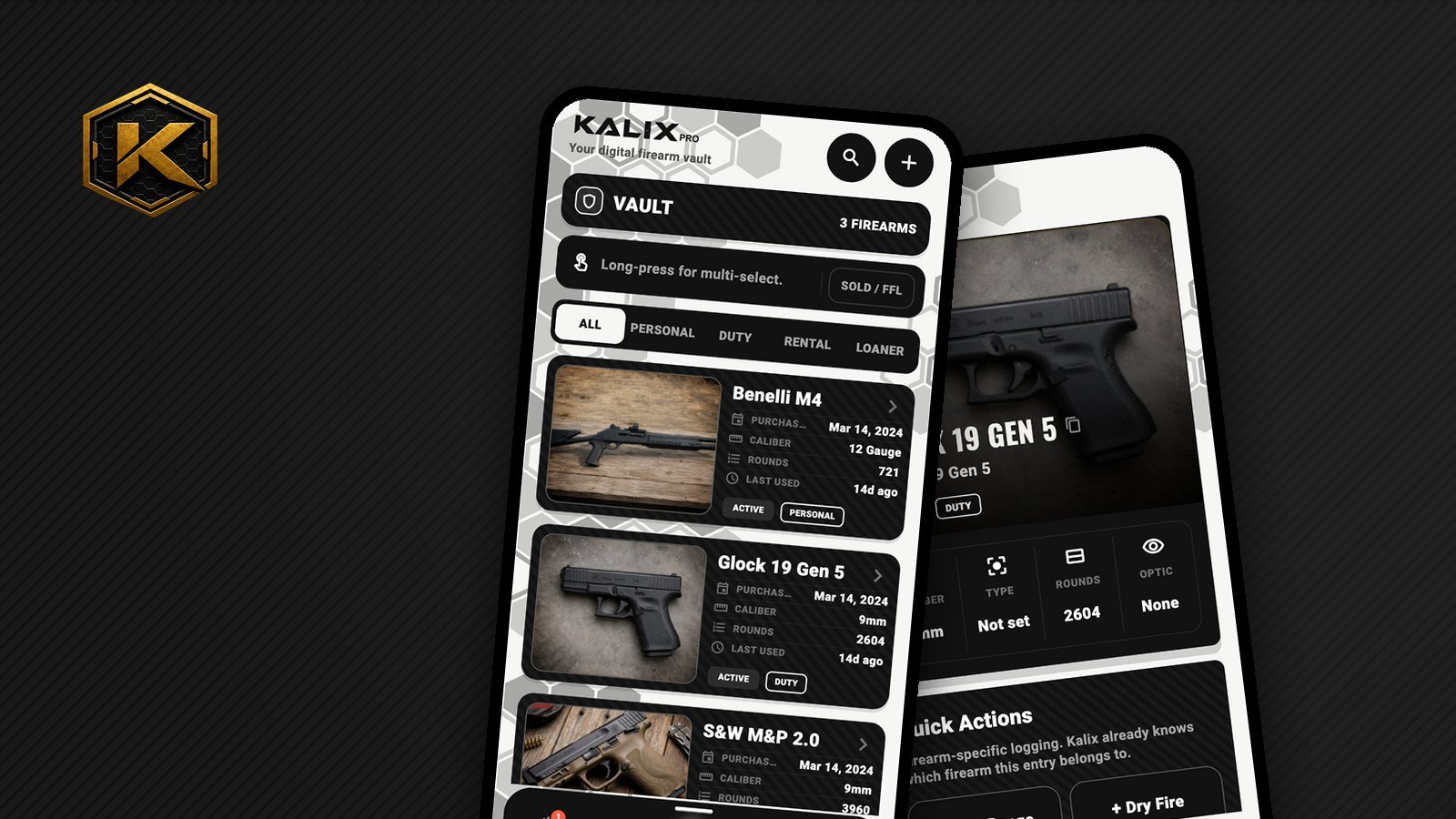
Kalix keeps all of this in one place on your phone. Every firearm has its own record for make, model, serial number, purchase details and photos, and receipts and warranty cards attach right to the firearm they belong to. When you need it, Reports & Export builds an Insurance / Lost Property PDF in seconds, and an encrypted .kal backup puts a copy of the whole vault wherever you choose to keep it.
Further reading
- How to create a home inventory, Insurance Information Institute
This note is general information, not insurance or legal advice. Coverage varies by policy and insurer, so confirm the details with your agent.
Posted in Records & Insurance · Records · Insurance